
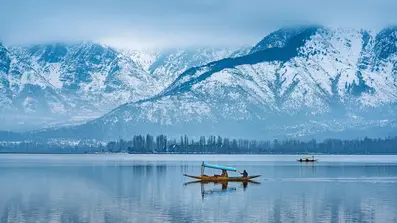
Places to Visit in Kashmir: My Journey Through Heaven on Earth
By a Solo Traveller Who Fell in Love with the Valley
I still remember the moment the plane began its descent into Srinagar. I pressed my face against the cold window, and what I saw took my breath away. Snow-capped mountains, green valleys, shimmering lakes, and little wooden houses tucked between the trees. It looked like someone had painted a dream. That was the day I understood why Kashmir is called “Paradise on Earth.”
I had been planning this trip for almost a year. I had read countless travel guides, watched dozens of videos, and asked every person I knew who had visited the valley. But nothing — absolutely nothing — prepared me for the real thing. People often ask me about the best places to visit in Kashmir, and I always tell them the same thing — you have to experience it yourself. But until you do, let me walk you through the places to visit in Kashmir that I explored, step by step, so you can plan your own perfect trip.
My First Stop: Srinagar — The Heart of Kashmir
I landed in Srinagar on a cool morning in October. The air was crisp, and there was a faint smell of pine and saffron in the breeze. Srinagar is the summer capital of Jammu & Kashmir, and it is the starting point for most travellers exploring the valley. In fact, when locals are asked about the top places to visit in Kashmir, Srinagar always comes first on the list.
Dal Lake — A World on Water
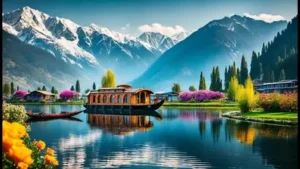
My first experience in Srinagar was staying on a houseboat on Dal Lake, and I honestly cannot think of a better way to begin a Kashmir trip. These houseboats are beautiful — made of carved wood, decorated with handmade rugs and traditional Kashmiri furniture. I sat on the small deck of my houseboat every morning with a cup of kehwa (Kashmiri tea made with saffron and almonds) and just stared at the water. It felt unreal.
A ride on a Shikara (a small wooden boat) across Dal Lake is something you simply cannot skip. I floated past floating vegetable markets where local farmers were selling their produce right from the water. I passed through narrow water channels lined with willow trees. The whole experience was peaceful in a way I had never felt before.
My tip: Book your houseboat stay at least two weeks in advance if you are visiting during peak season (April–June or September–November). Prices can vary a lot, so negotiate politely. Dal Lake alone is enough reason to add Srinagar to your list of places to visit in Kashmir.
Mughal Gardens — A Touch of Royal History
Srinagar is also home to some of the most beautiful Mughal gardens in India. I visited Shalimar Bagh, Nishat Bagh, and Chashme Shahi on the same day, and each one was unique in its own way.
Nishat Bagh, built by Asif Khan in 1633, sits right on the banks of Dal Lake with the Zabarwan mountains rising behind it. The terraced layout, the fountains, and the rows of chinar trees turning golden in autumn made it look like a painting. Shalimar Bagh, known as the “Garden of Love,” was even more romantic. I spent almost an hour just sitting on the grass, listening to the sound of flowing water from the channels.If you are making a list of places to visit in Kashmir, these Mughal gardens must be on it — they are unlike anything you will see elsewhere in India.
Gulmarg — The Meadow of Flowers
I took a taxi from Srinagar to Gulmarg, which is perhaps fifty kilometers distant. The journey itself was lovely, with meandering mountain roads, pine trees, and small roadside stores offering maize and steaming chai.
Gulmarg, which literally means “Meadow of Flowers,” is one of the most famous places to visit in Kashmir. In winter, it turns into a ski resort. In summer and autumn, it becomes a vast open meadow covered in wildflowers. I went in October, so the landscape was a mix of both — some snow on the higher peaks and green meadows at the lower levels.
The Gondola Ride
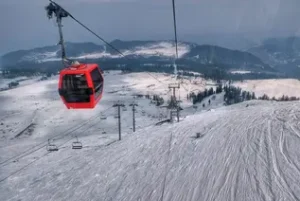
The biggest attraction in Gulmarg is the Gondola cable car, which is one of the highest cable car rides in Asia. I took it in two phases. The first phase goes from Gulmarg to Kongdori (around 3,080 metres). The second phase goes all the way up to Apharwat Peak (around 3,980 metres).
Standing on top of Apharwat Peak, I felt like I was on top of the world. The view of the Himalayan range stretching in every direction was something I will never forget. My legs were shaking — not from fear, but from the sheer beauty of it all.
My tip: Start early. The Gondola queue can get very long, especially during weekends and holidays. Reaching by 8 AM is a good idea.
Pahalgam — The Valley of Shepherds
Next on my list was Pahalgam, about 95 kilometres from Srinagar. Pahalgam is one of the most peaceful places to visit in Kashmir, and it is also the base camp for the famous Amarnath Yatra pilgrimage every year.
The drive to Pahalgam took me through apple orchards, saffron fields, and small Kashmiri villages. I stopped at the Saffron Fields of Pampore on the way. October is the harvest season for saffron, and the fields were a sea of purple flowers. The local farmers let me walk through the field and even showed me how the tiny saffron threads are carefully picked from each flower by hand. I bought a small box of pure Kashmiri saffron — it is the best in the world, and no gift I could take back home would beat it.
Betaab Valley and Aru Valley
In Pahalgam, I hired a local pony and guide to explore Betaab Valley and Aru Valley. Betaab Valley got its name from the 1983 Bollywood film Betaab, which was shot there. It is a wide, open valley surrounded by dense forests and a clear river running through it. Aru Valley is even quieter and more pristine — a favourite spot for trekkers and campers.
I sat by the river in Aru Valley for a long time, just listening to the water. There was no phone signal, no noise from the city — just the sound of the river, the wind through the pine trees, and occasionally a shepherd calling out to his sheep. It was the most peaceful afternoon I have had in years.
Sonmarg — The Meadow of Gold
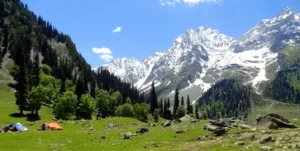
I had saved Sonmarg for later in my trip, and I am so glad I did. Sonmarg, meaning “Meadow of Gold,” is about 80 kilometres from Srinagar and sits at an altitude of around 2,730 metres. It is one of those places to visit in Kashmir that truly looks different from everything else — more dramatic, more raw, and more powerful.
The drive to Sonmarg follows the Sindh River, and every turn in the road brings a new view. By the time I reached the main meadow, I was already overwhelmed. Snow-covered peaks towered above, and a cold wind blew across the wide green valley.
Thajiwas Glacier
The main attraction near Sonmarg is the Thajiwas Glacier. You can either trek there on foot (about 3–4 kilometres) or rent a pony. I chose to walk, and the trail passed through some of the most stunning alpine scenery I had ever seen. The glacier itself was enormous — a massive river of ice flowing down from the mountain.
I touched the ice and felt the cold shoot up my arm. It was hard to believe that I was standing on something that had been frozen for thousands of years.
My tip: Sonmarg gets very cold, even in summer. Carry a thick jacket, gloves, and waterproof shoes no matter what time of year you visit.
Yusmarg — Kashmir’s Hidden Gem
Most people visiting the places to visit in Kashmir skip Yusmarg, and that is honestly their loss. Yusmarg is a small, quiet meadow about 47 kilometres from Srinagar, and it is far less crowded than Gulmarg or Pahalgam. I discovered it on the recommendation of my houseboat owner, and it turned out to be one of my favourite places in the entire valley.
Yusmarg is surrounded by dense forests of fir and pine, and the meadow itself is dotted with wildflowers. A small river called the Doodh Ganga (meaning “Milky River”) flows through it, fed by melting snow. I spent a quiet afternoon here, walking through the forest and sitting by the river. It felt like a secret that Kashmir was sharing only with me.
Doodhpathri — A Bowl of Milk
Doodhpathri, which means “Valley of Milk,” is another lesser-known treasure. At 2,730 meters above sea level, it is roughly 42 kilometers from Srinagar. The valley’s milky-white streams, which are fed by snowmelt from the nearby peaks, are the source of the name.
When I arrived, the valley was quiet — just a handful of other visitors and a few local shepherds with their horses. The meadows were soft and wide, the streams crystal clear, and the air so fresh it almost hurt to breathe. Doodhpathri does not have many tourist facilities, which is exactly what makes it beautiful. It is nature at its most honest. If you want a peaceful escape away from the crowds, Doodhpathri is one of those places to visit in Kashmir that will genuinely surprise you.
Gurez Valley — Where Few Travellers Go
Gurez Valley is not on most tourist itineraries, but if you are an adventurous traveller, it is one of the most extraordinary places to visit in Kashmir. Located about 123 kilometres from Srinagar, near the Line of Control, Gurez requires a special permit for some areas. The road to Gurez passes through the Razdan Pass (3,450 metres), and the drive is both thrilling and terrifying.
But the reward is worth it. Gurez is a remote, untouched valley with wooden villages, the roaring Kishanganga River, and mountains that seem to press in from all sides. The people here — the Dard Shins — have their own distinct culture, dress, and language. I stayed at a simple guesthouse run by a local family, ate home-cooked Kashmiri food, and spent evenings listening to folk songs by the fireplace. It was one of the most genuine travel experiences of my life.
Naranag — Ancient Temples in the Mountains
As someone who loves history, I could not leave Kashmir without visiting Naranag. This small village, about 50 kilometres from Srinagar, is home to ancient Hindu temple ruins dating back to the 8th century. The ruins sit at the base of a mountain, beside a clear river, surrounded by forest. Not many people include Naranag when they think about places to visit in Kashmir, but I think that is a big mistake.
The hike up to the ruins takes about 30 minutes, but the trail is beautiful. Old stone walls covered in moss, carved pillars lying on the ground, and the sound of the river below — Naranag is a place where history feels alive. Naranag is also the starting point for several high-altitude treks, including the popular trek to Gangabal Lake.
The Food, the People, and the Warmth
No travel story about Kashmir is complete without talking about the people and the food. One thing I quickly realised is that among all the places to visit in Kashmir, the warmth of the people is consistent everywhere — from the Dal Lake houseboats to the remote villages of Gurez. I was welcomed with warmth that I had not expected. Kashmiri people are incredibly hospitable. Strangers invited me in for tea. Shop owners told me stories about their village. Children waved at me from across the road.
The food was extraordinary. Wazwan is the traditional multi-course Kashmiri feast, and I had it at a local restaurant in Srinagar. Dishes like Rogan Josh (spiced lamb curry), Gushtaba (meatballs in yoghurt gravy), Yakhni (lamb in yoghurt and spice broth), and Dum Aloo (slow-cooked potatoes) were flavours I had never experienced before. I also lived on Kashmiri Kehwa throughout my trip — that warm, saffron-spiced tea is something I genuinely miss every single day.
Best Time to Visit
If you are planning to explore the places to visit in Kashmir, the best time depends on what you want to experience:
- Spring (March–May): The famous tulip gardens bloom, and the valley is covered in flowers. This is one of the most beautiful times to visit.
- Summer (June–August): Perfect weather for sightseeing, trekking, and camping. This is peak tourist season.
- Autumn (September–November): My personal favourite. The chinar trees turn gold and red, the crowds thin out, and the air is cool and fresh.
- Winter (December–February): Gulmarg becomes a world-class ski destination. Snow blankets the entire valley. Cold, but magical.
If you’re planning to explore the beautiful Places to Visit in Kashmir, make sure to check important travel updates, weather conditions, hotel availability, and tourism guidelines before starting your journey. For official travel information, permits, safety updates, and tourist assistance, you can visit the Jammu & Kashmir Tourism Department and Directorate of Tourism Jammu websites.
You can also explore more travel guides on our website by reading our popular blogs on destinations like Manali, Delhi, Munnar, and many more to discover more amazing places, travel tips, budget ideas, and itinerary suggestions for your next trip. These guides will help you plan a smoother and more memorable travel experience across India.
My Final Thoughts
I spent 12 days in Kashmir, and I can say with complete honesty that it changed something in me. There is a quietness and a beauty to this valley that I have not found anywhere else. The mountains feel ancient. The lakes feel still. The people feel warm. And the food feels like love on a plate.
The places to visit in Kashmir are not just tourist spots on a map. Each one carries a story, a feeling, a moment that stays with you long after you have come home. Whether it is the silence of Doodhpathri, the grandeur of the Thajiwas Glacier, the history of Naranag, or the shimmer of Dal Lake at dawn — Kashmir gives you something that no other destination can.
If you have been dreaming about Kashmir, stop dreaming and start planning. Research the places to visit in Kashmir that match your travel style — adventure, peace, history, or food — and build your itinerary around them. I promise you — the valley will exceed every expectation you have ever had.
Kashmir is not just a destination. It is a feeling.
-Prayanjali Singh